











Exploring The Future of Educational Technology In Universities
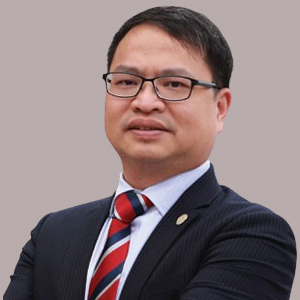
Kate Ames, Council Member, CQuniversity Council, CQ University
Kate Ames, the Director of Learning, Design, and Innovation at Central Queensland University has a proven track record of strategic innovation in project development and implementation. Building and leading high-performing teams, she has been instrumental in pushing boundaries and driving excellence in learning and teaching landscapes. She oversees various aspects, including innovation teams, micro-credentials, short courses, and the development of new course models across multiple campuses in Australia.
In an interview with Education Technology Insights, Kate Ames, Director of Learning, Design and Innovation at CQUniversity, shares her insights on the challenges of ed-tech in universities and overcoming them to future-proof the world of education.
What are some of the major challenges that have been impacting the educational space lately?
We face three major challenges in Australia - digital disruption, the influence of legislations and social disruption.
Digital disruption refers to the major changes that are happening in the digital world due to the rise of artificial intelligence, changes to the learning management systems, and advancements in learning analytics and education technologies. They appear to stabilise the systems but often cause confusion among students and staff.
The second challenge is the regulation in Australia that underpins university funding. We are undertaking a pilot project with a micro-credential that is going to make some changes on how we design and develop our courses. At the same time, there is a broader review happening in Australia called the Australian Universities Accord which will have crucial implications on funding structures and approaches generally.
Social disruption, however, is an international challenge. The post pandemic world demands a larger workforce. So, people are looking for short term courses and qualifications for rapid upskilling. The situation is compelling people to question the value of investing large amounts in universities and to reflect on what they actually need. This also poses a challenge before us.
With all these potential transformations and disruptions that are prevailing in educational space, how do you envision its future?
The future of education is definitely going to look different, but the role of universities cannot be overlooked or replaced. A degree is considered a fundamental unit of learning and a valuable qualification that allows people to engage in critical conversations associated with a discipline. Also, human beings are social animals who crave validation. We have seen that the validation from an external assessor or a university does matter to them.
But we will need to explore transformative ways to cater to individuals and society by altering how we deliver education. This involves rethinking whether the knowledge is to be delivered as large blocks or micro chunks, who is going to deliver it, how to integrate groundbreaking technologies like artificial intelligence and machine learning into teaching methods, and focus on creating more work-ready individuals.
Would you like to talk about any latest project or program that you have been working on?
We launched a hyper-flexible MBA course in 2018, which stands out for the absence of a due date for assessment submission. It has a fixed curriculum, which is comprised of eleven core units including a capstone unit. Students can start at any time, focus on what they want and work through the assessment with the support of academic staff. We have a large academic team to support students in which I am also a member.
The Future Of Education Is Definitely Going To Look Different, But The Role Of Universities Cannot Be Overlooked Or Replaced
The course is at its reviewing stage now and we have got some really valuable insights from the review process. Our funding in Australia is predicated on term-based enrolments in units, which requires thinking through in a course that doesn’t have standard terms or semesters. Also, unlike other courses, the students getting enrolled into this program are managed at the course level, which is why while reviewing, we had to interrogate our processes and reporting styles. It has actually been the most insightful and important work that we have done, and serves as a reminder to always consider the human experience in the system while developing something new. It has been amazing to see how we have been able to build a learning community online around a whole course with large student numbers.
Would you like to share a piece of advice with the other leaders and fellow peers working in the space so they can gain some insights from the experience you have gained over these years?
The pandemic has changed the educational system rapidly and many universities have now transitioned to online classes. Institutions that were not accustomed to dealing with online systems had to rapidly upskill and introduce learning management system and reporting tools. Staff have reported being a bit overwhelmed with the sudden influx of new tools and it is becoming harder for universities to introduce new education technology into an existing complex layer.
This is precisely why every university has to be very clear on why they need a tool and if that is the best investment for both the students and the staff. Likewise, it is better to not put all the eggs in one basket. Investing in a single learning management system can be risky since it doesn’t allow spreading the risk and can end up binding you to a single block of technology. Hence, it is crucial to take a holistic view and lay a strong technological foundation, but always with our learners and their potential in mind.

