

A featured contribution from Leadership Perspectives: a curated forum reserved for leaders nominated by our subscribers and vetted by the Construction Tech Review Advisory Board.

Learning Sciences at Singapore University of Technology and Design
Scholarship of Teaching and Learning (SOTL) Redefined

Nachamma Sockalingam
Introduction
It is nearly 33 years since the idea of the scholarship of teaching and learning (SOTL) was first introduced in the U.S. However, we are still in the early stages of implementing SOTL at our university in Asia and are keen to understand what SOTL means, so that we will be able to implement, support and assess the impact of SOTL effectively. The pandemic has also changed the way we teach in higher education, and there is a push for more blended and online learning. This has an impact on teacher development in the form of SOTL. This article attempts to add to the current understanding and definition of the ‘Scholarship of Teaching and Learning’ (SOTL).
Educational Context
We introduced ‘scholarship of teaching and learning’ (SOTL) at my university in 2016 as a form of faculty development and we have been building a community of SOTL practitioners and projects. Over the past 7 years, we have noticed a growth in the number of faculty-led teaching projects, presentations (E.g., university pedagogy magazine, sharing sessions) and peer-reviewed publications by faculty, grant applications on educational research projects. There are distributed SOTL committees on campus as well. Progressively, we wanted to measure the impact of SOTL on teaching and learning.
We then realized that it is not easy and straightforward to measure SOTL. Our proxy measure has been to look at the number and type of publications and presentations. There was also much discussion at the faculty and leadership level about whether we should emphasize publications lest faculty members may focus primarily on publications than student learning. It is to this end that I started out in search of ways to measure SOTL. As I started on this journey, I realized that it is first important to define what SOTL means, so that we know what to measure, and this becomes the focus of this paper – to define SOTL.
Putting the various literature and the new perspective together, we can synthesize the definition of SOTL to be informed, evidence-based scholarly teaching, that takes socio-contextual consideration in implementing teaching and learning practices in the wider context of stakeholder participation in collaboration with students, parents, edtech partners, and industries, and gets the “team” to take a reflective approach about the teaching and learning
Looker (2018) argues that there are differences between East Asian views and western views of SOTL and suggests that if SOTL is to be meaningful internationally, it needs to move away from the western ‘hegemonic’ viewpoint. Even though it is challenging to agree on a specific and universal definition, it is essential to attempt to have a base-level understanding of any concept so that it is possible to communicate the idea/concept to others and have a rational approach to measuring the concept.
My viewpoint is that when we construct definitions in an inductive manner, it is often not possible to have a universal and unified definition that is permanent. Definitions need to be reviewed from time to time and redefined to realign with the context and time. However, we must also recognize that the various past definitions have well served the time and purpose. In the next section, I present the various perspectives of SOTL and attempt to synthesize an emerging definition of SOTL.
Historical Perspectives of SOTL
Boyer’s (1990, 24) ‘Scholarship Reconsidered’ is frequently referenced as the origin of the scholarship of teaching and learning (SOTL). In his seminal work, Boyer put forth his ideologies that teaching should be more than transmitting knowledge but transforming and extending it (teaching) and that teaching should be a scholarly work. He also argued that universities should recognize the richness of academic work and reward contributions in what he proposed as four different and overlapping forms of scholarship – teaching, integration, application of knowledge, and discovery. Boyer defines scholarship of teaching to be informed, evidence-based and reflective teaching which fosters student learning.
Building on this, the Carnegie Foundation for the Advancement of Teaching planted the seeds for international SOTL in the form of the Carnegie Academy for the Scholarship of Teaching and Learning (CASTL) program in 1998. Even though the program ended in 2009, the seeds of SOTL have been disseminated to many places to root and grow, and we see SOTL being transplanted in other contexts. In 1999, Shulman added another dimension to this notion that teaching should be considered as ‘community property’ belonging to the community of scholars rather than just the individual teacher and his/her classroom. This meant that teaching needs to be made public, critically reviewed, and produced in a form that allows others to build on. An over-encompassing definition of SOTL was coined by Illinois University as ‘systematic reflection on teaching and learning made public’.
In 2013, Peter Felten added the fifth dimension to good SOTL practices that; SOTL extends beyond teachers to include students in the form of ‘students in partnership’. He builds these ideas from Hutchings and Huber that there needs to be ‘a commitment to more shared responsibility for learning among students and teachers, a more democratic intellectual community, and more authentic co-inquiry’.
Moving Forward in Today’s Context
Given the current global context of distant learning and technology-enhanced learning in the post-pandemic world, it is now becoming apparent that teaching and learning is no longer just about the teachers and students in the classroom. There are other stakeholders involved in the process, such as edtech partners, maker spaces, libraries, teaching and learning centres, industry partners, and overseas institutions to name a few. Looker (2018) suggests that this definition of SOTL should move beyond teaching and learning to include the wider context of social, cultural, political, and material.
While not all SOTL projects need to be conducted in partnership with educational stakeholders (and students), it is logical for faculty members to include educational stakeholders (and students) in building the systems and tools together for teaching and learning (Similar to the ideas of Felten, 2013). Such extended stakeholder participation already exists in practice in the SOTL literature but is not stated explicitly. For instance, Sobel’s (2022) article on ‘Motivating Factors for the Transfer of Information Literacy Skills among Undergraduates’ involves collaboration between faculty members and librarians to study information literacy skills.
Redefining SOTL
Putting the various literature and the new perspective together, we can synthesize the definition of SOTL to be informed, evidence-based scholarly teaching, that takes socio-contextual consideration in implementing teaching and learning practices in the wider context of stakeholder participation in collaboration with students, parents, edtech partners, and industries, and gets the “team” to take a reflective approach about the teaching and learning (Figure 1).
SOTL projects can be expanded to a wider context of higher education, rather than just classroom practices. For instance, we may want to explore how students’ mental wellness or coping strategies during the recent pandemic may have an impact on their studies, and this is beyond the classroom teaching and learning activity, but certainly has an impact.
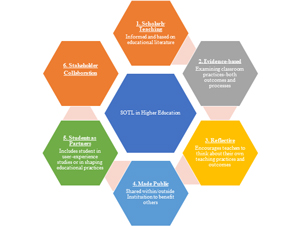
Figure 1. SOTL Redefined (Nachamma Sockalingam, 2023)
The new definition of SOTL can serve as a starting point for identifying faculty engagement and involvement in the various phases, types of projects, the extent of collaborations etc. The next step is to identify ways to measure SOTL activities and the impact of SOTL on the quality of teaching and learning.
